

The 140-Character Revolution: How Jack Dorsey Changed Communication
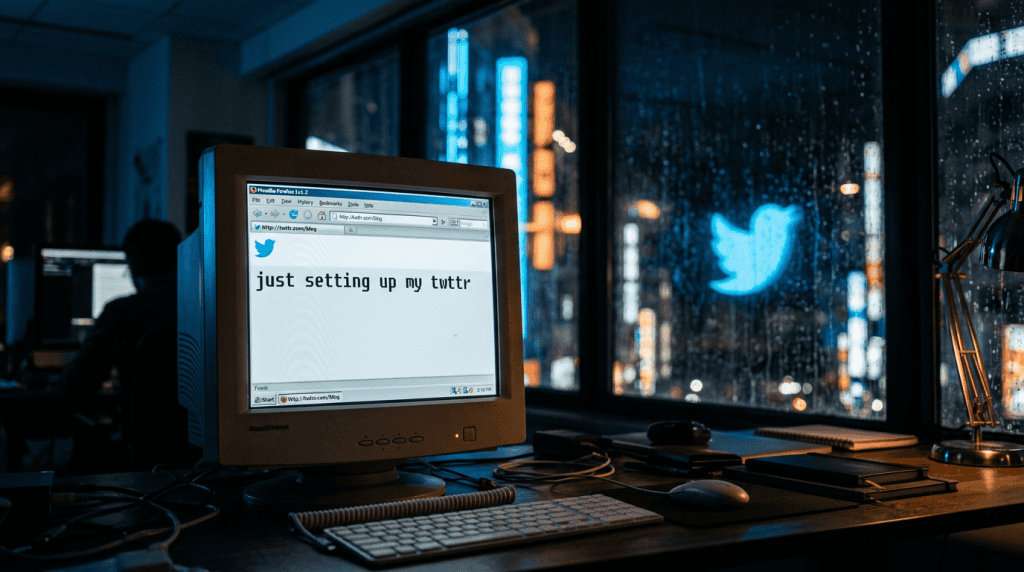
On March 21, 2006, a young developer named Jack Dorsey sent a short, seemingly mundane message into the digital void: “just setting up my twttr.” At the time, the platform—then a side project at the podcasting company Odeo—was little more than an Experiment in “ambient awareness.” No one could have predicted that this short string of characters would evolve into a global town square, a catalyst for social revolutions, and a battleground for modern free speech.
As we mark 20 years since that first tweet, the platform now known as X has undergone a metamorphosis that reflects the broader shifts in the internet itself. From its early days as a playground for tech elites in San Francisco to its current status as a geopolitical tool owned by the world’s richest man, Twitter’s journey is the story of the 21st-century information age.
The Birth of the Real-Time Web
In the mid-2000s, the internet was primarily a destination for long-form content or asynchronous communication like email and forums. Twitter introduced the concept of the “real-time web.” By limiting posts to 140 characters—a technical constraint dictated by the limits of SMS messaging—Twitter forced a new kind of brevity and urgency onto its users.
This constraints-bred creativity fostered a unique lexicon. Users invented the hashtag (#) to categorize topics, the “RT” (retweet) to share information, and the “@” mention to direct conversations. This wasn’t just a new site; it was a new social operating system. For the first time, people across the globe could witness historical events as they happened. During the 2008 Mumbai attacks and the 2009 Iranian election protests, Twitter proved it could outpace traditional newsrooms, turning every user with a mobile phone into a potential citizen journalist.
From Arab Spring to Political Polarization
By its tenth anniversary, Twitter was widely hailed as a democratic equalizer. It played a pivotal role in the Arab Spring, providing activists with a platform to organize and bypass state-controlled media. However, the tool that empowered activists also proved remarkably effective for populist leaders and political polarization. The 2016 U.S. Presidential Election marked a turning point where the platform became less about “what’s happening” and more about “what I’m angry about.”
The platform’s impact on global politics cannot be overstated. It became the primary channel for the “Twitter Diplomacy” of the Trump era, where policy could be dictated or dismantled in a single post. This era also exposed the darker side of real-time connectivity: the rapid spread of misinformation, the rise of bot networks, and the challenges of moderating speech at a global scale.
The Elon Musk Pivot and the Rebranding to X
The most significant shift in Twitter’s 20-year history occurred in late 2022, when Elon Musk acquired the company for $44 billion. What followed was a radical restructuring that saw the workforce slashed by nearly 80%, the verification system overhauled into a paid model, and the iconic blue bird logo replaced by a stark “X.”
Musk’s vision for an “everything app”—modeled after China’s WeChat—represents a fundamental break from the original Twitter. Under Musk, the platform has pivoted toward a creator-focused economy, prioritizing video content and algorithmic “For You” feeds over the chronological flow that once defined the service. While critics argued that the platform’s cultural relevance was vaining, the data suggests it remains a critical hub for sports, finance, and breaking news, though its identity is more fractured than ever before.
The Legacy of the Tweet
Two decades later, the legacy of that first tweet is mixed. On one hand, Twitter democratized information. It broke down the barriers between celebrities and fans, politicians and constituents, and experts and the public. It gave a voice to marginalized communities and created “Black Twitter,” a powerful cultural force that has consistently set the agenda for the broader public discourse.
On the other hand, the platform’s 20-year run has highlighted the fragility of our digital public squares. The issues of harassment, echo chambers, and the monetization of outrage remain unsolved. As competitors like Threads, Bluesky, and Mastodon attempt to replicate the lightning-in-a-bottle success of original Twitter, they find that replacing an established social graph is much harder than simply building a better app.
What Does the Next Decade Hold?
As we look toward the future, the “tweet” as we knew it is likely gone. In the age of generative AI and short-form video, the text-heavy legacy of Twitter is being overshadowed by a multi-modal internet. However, the fundamental desire it tapped into—the need to share a thought instantly with the world—remains as strong as ever.
Whether the platform survives another 20 years as X, or whether the baton is passed to a decentralized successor, the impact of Jack Dorsey’s 2006 status update is permanent. It didn’t just change how we talk; it changed how we see the world, one character at a time.

 English